As part of the Shirley Chisholm Project of Women’s Activism’s 2012 Conference “Be a Catalyst for Change; Shirley Chisholm’s Lifelong Legacy,” five Brooklyn College students were awarded for their outstanding essays on following in Chisholm’s footsteps as ‘catalysts for change.’
We honor the student winners Sabia Akbar, Loretta Chin, Ayisha Irfan, Biola Jeje and Jamilla Uddin. Their essays are available for download.
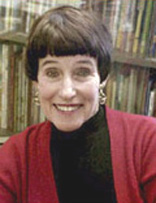
Department of Childhood Education/Special Education Professor Karel Rose introduced the essay winners during the conference:
The call went out for students to answer the question, “What do you want to be able to say at the end of your life?” Wow! What would you say? What would I say? But most importantly, what did the students say? You know what Shirley said: “When I die, I want to be remembered as a woman who lived in the twentieth century and who dared to be a catalyst for change.”
It was with those words that we challenged our students and it was those words that inspired a flood of passionate responses that will resonate today in this room. What would Shirley think if she could hear how the next generation has translated her legacy? Here is a sampling of what our students wrote: “Impossible is not a word in my vocabulary;” “Though we would love to believe the civil rights movement is long over and we accomplished the goal of equality years ago, sadly, the current reality is very different;” “Being a catalyst for change, simply means doing what needs to be done for the greater good.” “I am not going to wait to act upon my convictions;” “Social justice resonates with my own religious values and my identity because I find it intolerable to see social injustice go ignored;” “I realize that we are all our sisters’ keepers.” Can we have any doubt that these women will change the world if only one person at a time?
The student winners were Sabia Akbar, Loretta Chin, Ayisha Irfan, Biola Jeje and Jamilla Uddin. To honor them, the Chisholm Project is sharing their essays on our website. They are available for download.
As Professor Rose concluded,
I am convinced that somehow Shirley is shining down upon this amazing convocation today joyful that these remarkable young women who are her legacy are without a doubt, unbossed and unbought. Nothing to worry about Shirley!
Biola Jeje wrote:
My activism is one of the ways I understand the world I grew up in, seeing the effects of the lack of education translate to poverty in Coney Island (where I grew up). It was devastating seeing a lot of my peers suffer from asthma and later learning it was probably due to the waste transfer station in their area. Knowing most people had an abundance of processed foods but no fruits and vegetables and seeing how that correlates to diabetes and other health related conditions was also incredibly upsetting. With knowledge and action, these conditions could have been prevented, this is why I organize.
And:
Since I began at Brooklyn College I have only begun to deepen my organizing and working to enact real change. I am organizing with New York Students Rising and am working on building connections for a national student movement around the right to education. I am also currently drafting a bill that would make higher education free. I believe that especially in the times we are in now we can make real change and I’m working hard to make it happen. Read more here.
Sabia Akbar, a pre-med psychology major, wrote:
Similar to Shirley Chisholm, I am a catalyst for change. A change in providing health care to those in the world who are less fortunate than me. Those who can not walk to the nearest drug store to fill a prescription, those who only have money to buy dinner for that night, those who inspire me to become the best student, volunteer, doctor and human being I can be, those who have touched me in an unforgettable way. As Chisholm, I want to be remembered as a woman who fought for change and made a difference. My adventures in practicing global health care do not stop when I graduate Brooklyn College. I plan on using my year off to travel and provide health care in India and Africa through programs such as Foundation of Orthopedics and Complex Spine. My passion for global health care will allow me to fulfill the duties of a medical doctor. Read more here.
Jumilla Uddin, a Women and Gender Studies major, wrote:
I do not want to be remembered as the first-female-to-graduate-from-college-in-my family or the first-Bangladeshi-Muslim-woman-to-eventually-run-for-Congress. I want to be remembered as the one who gave young Bangladeshi girls a voice. I want to be someone who gave them hope where there was none and broke them out of this archaic tradition. I want to be remembered as someone who made them believe in themselves and their futures. I want to be the change that echoes freedom. Read more here.
Loretta Chin, a journalism major wrote:
I chose Journalism as my major as a way to become an even greater catalyst for change through the power to inform and educate the largest audience through print and multimedia platforms. Journalism can be seen as a potent force for education that leads to activism and public service. It sheds light in dark places, illuminates the mind, and inspires action.
Once I graduate, I plan to pursue higher aspirations for my career to pursue journalism as a form of activism through the power of the written word and to be a representative voice for those seeking justice and redress in their communities in the spirit of carrying out the Chisholm legacy to become a catalyst for change. Read more here.
Ayisha Irfan wrote:
As a Muslim American, I feel an obligation to speak out and do all that is in my power to bring about change. One of our many Islamic traditions states: “Whoever among you sees an evil action, let him change it with his hand [by taking action]; if he cannot, then with his tongue [by speaking out]; and if he cannot, then with his heart [by hating it and feeling that it is wrong] and that is the weakest of faith.” As a Muslim I am commanded to recognize and speak out against injustice regardless of who is committing it and whom it is being committed against and as an American it is my duty to make my country a better, more secure, place that stands by the Constitution and is in fact the beacon of “freedom and justice for all”.
and:
The relationship between suffering in minority communities and the importance of voting is one I cannot vocalize enough. Our vote is our ticket to demand accountability and to choose someone we feel will better represent us. That is the beauty of a democracy. Shirley Chisholm used that ticket to better the lives of her constituents. I hope that one day I too will be remembered as a catalyst for change. Read more here.
Leave a Comment